Two pumps keep causing problems
Two of four pumps keep failing, and attention naturally turns to the pumps. The review at an offshore plant showed a different picture: too much vacuum, misplaced measuring points, leaks, a wrongly configured pressure switch and backflow on pump failure. A pump problem that had to be solved as a system problem.
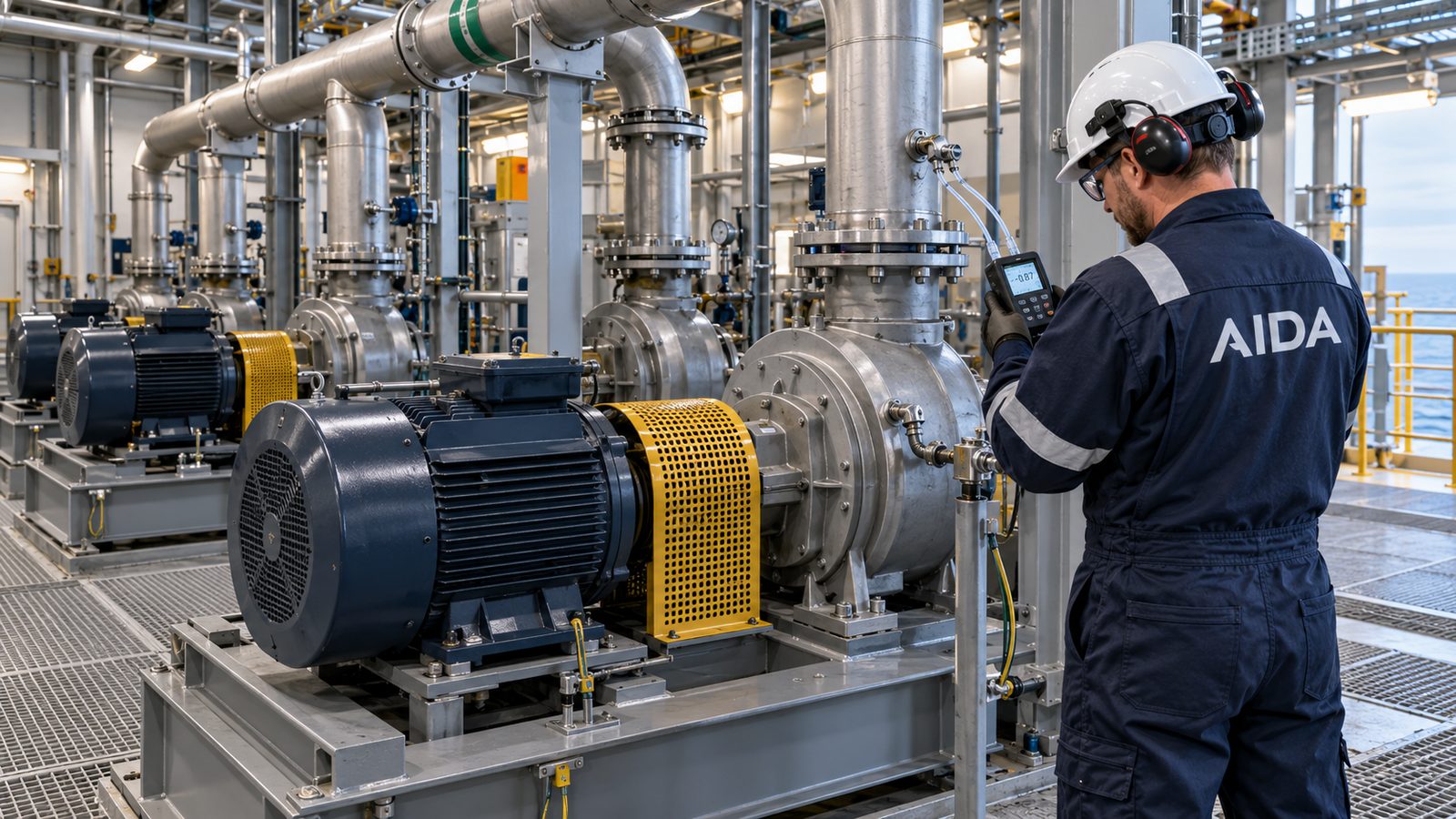
Two pumps keep causing problems. They stand out negatively in operation, and attention naturally turns to the pumps. Are they worn? Are they wrongly sized? Should they be replaced, or do we keep repairing them? Why is it these two that keep failing?
At an offshore plant we have worked on, the review showed a different picture. The two pumps causing the most problems were the ones that achieved the strongest vacuum. They had short connected lines, and the vacuum became too high for the intended operation. At the same time there were leaking seals at the shakers, problems with the pressure balance in the module, inadequate pressure monitoring and a risk of backflow on pump failure. What looked simply like a pump problem had to be investigated as a whole-system problem.
One important difference between the pump lines was their length. In this installation, the two pumps with short lines created too much vacuum, drew in a lot of mud and blocked the pipes. The pumps were capable of producing negative pressure, but their operation was not matched to the need in that part of the plant.
There was also a flaw in the measurement basis. The tapping points for the differential pressure transmitter, the PDT, were located in the pipes rather than in the shaker, where the process vacuum was meant to be assessed. The measurements therefore did not give a sufficiently representative picture of the pressure conditions being controlled. The review showed that the pumps were operating outside their permitted operating range. Measurement location, line routing and control therefore had to be assessed together.
A pump should deliver the right function within its permitted operating range. The aim is a vacuum matched to the process. The pumps that caused the most problems were, in other words, able to produce more than the system needed under the prevailing conditions.
Short and long lines call for a joint assessment. The same pump does not automatically mean the same function in different installations. Line length, pipe dimensions, bends, transitions, filters and other restrictions affect the conditions the pump works under. The same operating setting can therefore give different results in different parts of the plant. In this example, the short lines were part of the explanation for why two pumps stood out.
Pipe dimensions have to be assessed together with the required airflow, vacuum, air velocity and total pressure drop. The content of the airstream and the need to handle droplets or particles also form part of the sizing. A velocity limit has to be justified for the process in question. Speed control can make it possible to adapt operation, but the settings have to stay within the pump's permitted operating range. The result has to be verified through measurements and functional testing. Before replacement is considered, you need to understand both what the pump delivers and what the system requires.
At the same time, the seals at the shakers were leaking. Leaks can admit air through paths other than the ones the process is meant to use. That affects the vacuum conditions and the capture at source. Several factors had to be assessed together here. Some pumps created too much vacuum under their installation conditions, while leaks affected the airflow and the local function.
The pressure at the pump, the pressure at the shaker and the airflow through an opening describe different parts of the system. One measurement cannot explain all three. Smoke tests and measurements helped make visible how the air was actually moving. The assessment could then rest on more than the pumps' operating signals and pressure values on a screen.
The negative pressure in the room was also part of the problem. The shakers stood in a room with its own pressure conditions. That room was in turn part of a module with several interconnected areas and ventilation systems. When the pressure balance between these areas does not work as intended, the conditions around the process equipment change.
We therefore had to examine both the vacuum system and the ventilation in the module. Where did the replacement air come from? How did the air move between the rooms? What happened when pumps, fans or openings changed state? A measured pressure value always has to be understood together with its reference. Negative pressure relative to atmosphere and negative pressure relative to the neighbouring room do not necessarily describe the same condition. In this installation, the negative pressure in the pump room was also part of the problem. It had to be assessed together with the connected air paths and the possibility of contaminated air moving into the room. The room ventilation and the process extraction affected each other. They had to be examined together.
The pressure switch was set up wrongly. Another part of the review concerned the PDSL, a low differential pressure switch connected to a pneumatic damper. The setup was wrong. That made the instrumentation and the damper control a separate part of the troubleshooting. A signal from a pressure switch can only be interpreted correctly when the measuring points, reference, setting and associated logic match the function it is meant to monitor. Before the signal is used as a basis for decisions, you therefore have to check what it actually represents and how the damper responds.
It is easy to trust an alarm because it comes from an instrument. But the instrument's setup also has to be verified. A new pump would not have corrected the fault in the pressure monitoring or established the right pressure balance in the room.
What happened if one pump failed? The plant also had to be assessed outside normal operation. The four pumps drew air from the shakers and fed it into a common header. This was connected to an external exhaust duct that also carried contaminated air from the shaker area and the pits. At the same time, the pump room had a negative pressure of around 50 Pa. This combination created a problem during pump stops and maintenance.
If one pump failed while the other three kept running, the stopped pump could not simply be opened or disconnected. The other pumps continued to deliver air into the header. Without individual backflow protection, contaminated air could flow back through the open connection and into the pump room. The negative pressure in the room contributed to that flow. When a connection was opened, a new low-resistance air path arose between the exhaust duct and the room. Air that was supposed to be carried out of the installation could thus enter where personnel were meant to work.
Stopping all four pumps did not remove the problem either. The header was still connected to the exhaust from the pits. The combination of the pressure conditions in that exhaust, the negative pressure in the pump room and the lack of backflow protection meant that contaminated air could still flow back. The pump motors could stand still without the system being isolated in terms of pressure.
Before a pump could be opened or disconnected, safe isolation from the connected air paths had to be established and verified. Protection against backflow and isolation for maintenance are different functions. A non-return damper alone is not sufficient documentation of safe isolation. A good design has to make it possible to handle one failed pump without contaminated air from the rest of the plant being led into the working area.
Several faults can hide one another. In this review there was no single observation that explained the whole problem. Two pumps created too much vacuum under their installation conditions. The tapping points did not give a representative picture of the pressure at the shakers. Seals were leaking. The pressure conditions in the module affected the function. The pressure switch for the pneumatic damper was set up wrongly. On pump failure, backflow and the conditions in the pump room also had to be handled. If only one of these parts had been examined, important connections would have been missed. Troubleshooting therefore has to follow the whole function: from the task at the shaker, through the pump and on to the exhaust, with room pressure, instrumentation and control included in the assessment.
When is new equipment the right answer? A thorough review may still show that equipment has to be repaired or replaced. The decision should then rest on a documented need. Before ordering, it has to be clear which pressure and flow conditions are required, how the equipment will be controlled, and what should happen on failure. Measures against leaks, pressure imbalance, faulty instrumentation and backflow also have to be included. Otherwise the new equipment risks meeting the same operating conditions as the old. The example describes the findings that had to be dealt with. The effect of specific changes has to be confirmed through testing before improvements or savings can be documented.
At AIDA we start with the function the plant is meant to deliver. We examine the installation, compare the documentation with reality and measure under relevant operating conditions. We also assess what happens during stops, faults and maintenance. Then the measures can be prioritised. They may be sealing, corrected instrumentation, adapted control, a changed system design or replacement of equipment. The aim is for the investment to solve the cause of the problem and deliver a function that can be verified.
At AIDA we use a familiar saying as a reminder: "Insanity is doing the same thing over and over again and expecting a different result." If we replace the pump without understanding why it is causing problems, we risk repeating the mistake with new equipment. So we ask the question: before you order new pumps, do you know why the existing ones are causing problems?
AIDA assists with system understanding, troubleshooting, measurements and engineering, from symptoms in operation to a well-founded choice of measures.