Strong interest at ONS 2026
AIDA had its own stand at ONS 2026 in Stavanger, presenting PUSH — our solution for intelligent condition monitoring of rotating and mechanical equipment.
The stand gave us the chance to show both the technology and the story behind PUSH, alongside AIDA's wider work in offshore engineering, technical services and staffing.
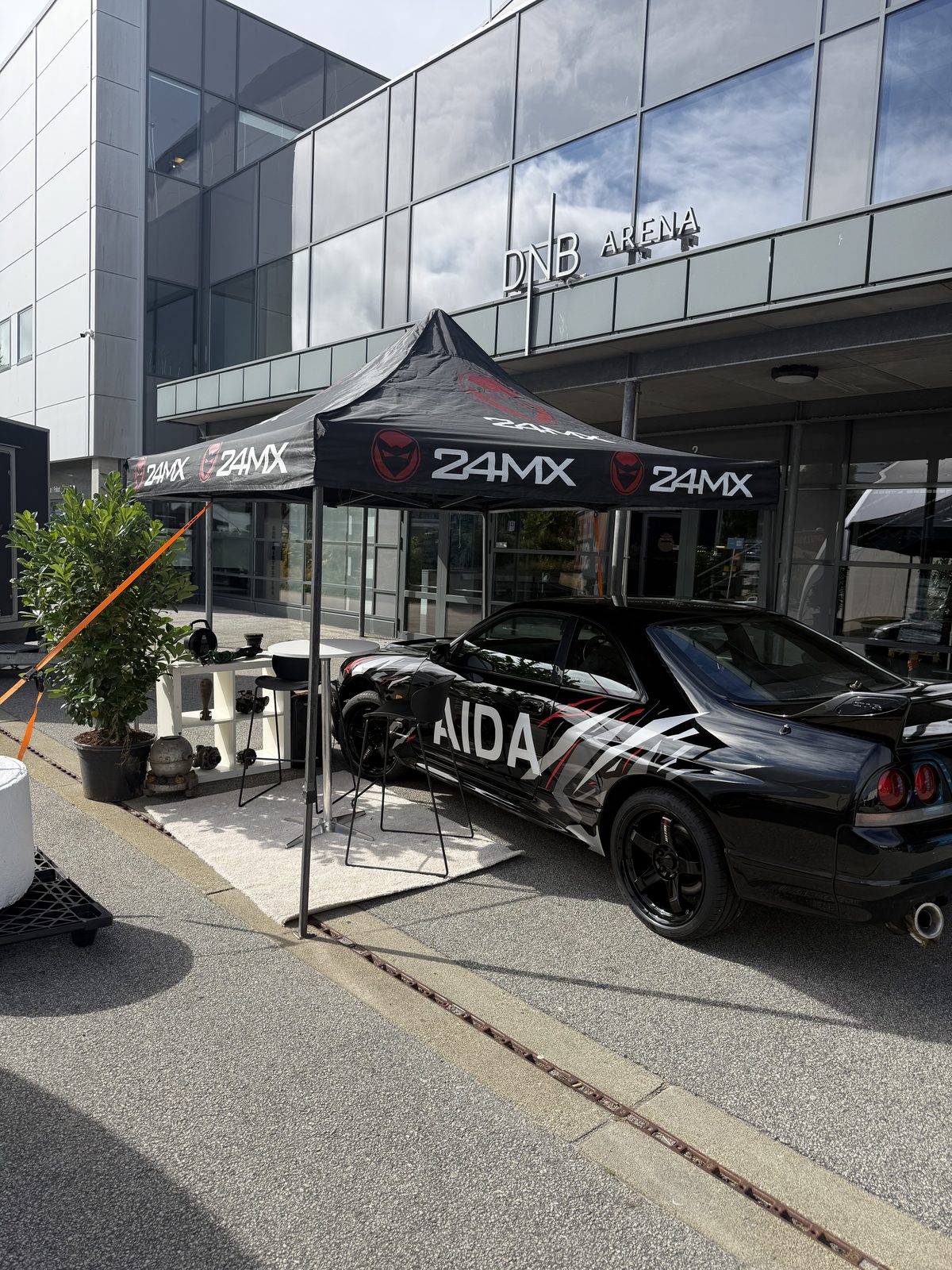
Why would an offshore engineering company start developing sensor technology for rotating equipment? The story began years ago, when we bought a somewhat unusual car — a Nissan Skyline. It was built from the ground up and later upgraded in several stages. After one major upgrade we ran into a problem: there was no straightforward solution that brought monitoring of the car's mechanical components, operating condition and service needs together in one place. We wanted to know what was actually happening to the engine, gearbox, propshaft and chassis — not only after a fault had occurred, but while a change was developing.
That was the start of PUSH. The first prototype was built around technology and a development platform from Nordic Semiconductor. The goal was a compact, flexible sensor that could follow the equipment over time, learn how it normally behaves and give warning when something starts to change.
PUSH records vibration, temperature, sound, air quality and other relevant operating data. When the sensor is installed, a learning phase begins in which PUSH builds a baseline for how the equipment behaves in normal operation. Once that baseline is established, the system moves to continuous condition monitoring. Using cloud-based processing, the signals are analysed and compared against the normal operating pattern. If the system registers abnormal development, the user can be alerted directly in the app. PUSH can also be connected to an ECU or other control systems, so sensor data can be seen alongside existing operating information.
What does a Nissan Skyline have to do with offshore equipment? The principle is the same whichever engine or machine is being monitored. Changes in vibration, temperature, sound and operating pattern say a great deal about mechanical condition — whether the equipment sits in a car, on a vessel, in a process plant or on an offshore installation. PUSH can therefore be adapted to engines, fans and pumps, gearboxes and transmissions, compressors, generators, shafts and bearings, and other rotating or mechanical equipment. The technology can also be developed further for equipment that moves periodically, such as actuators and fire dampers, where sensor data can track movement, response time and changes that may indicate sluggishness or wear.
Through practical work with HVAC systems, engines, fans, mechanical equipment, maintenance and troubleshooting, we see the challenges the industry faces. Unplanned downtime is expensive. Troubleshooting can take a long time, service history may be spread across several systems, and the spare parts needed are often identified only once the need has already arisen.
PUSH is not only meant to report how equipment is doing. The platform is being developed to connect technical condition with maintenance planning, spare parts and cost: when the next service is due, which parts are likely to be needed, the expected service cost, price and delivery time for parts, ordering and shipment tracking, service history and documentation, and how the equipment's technical condition is developing.
AIDA's stand at ONS 2026 was a success. We presented PUSH and the company's other services to representatives from the offshore, energy, maritime and technology sectors, and had a great many good conversations with prospective partners and future customers. Our participation has already opened several interesting dialogues that we are now following up.
PUSH is in the prototype and pilot phase, and AIDA is looking for companies with suitable rotating or mechanical equipment for further testing and development. The pilot projects will help document the technology under real operating conditions and ensure that the finished solution meets the industry's actual needs.
What began as a wish for better control over one very particular car is becoming a complete solution for the future of condition monitoring and maintenance of industrial equipment.